

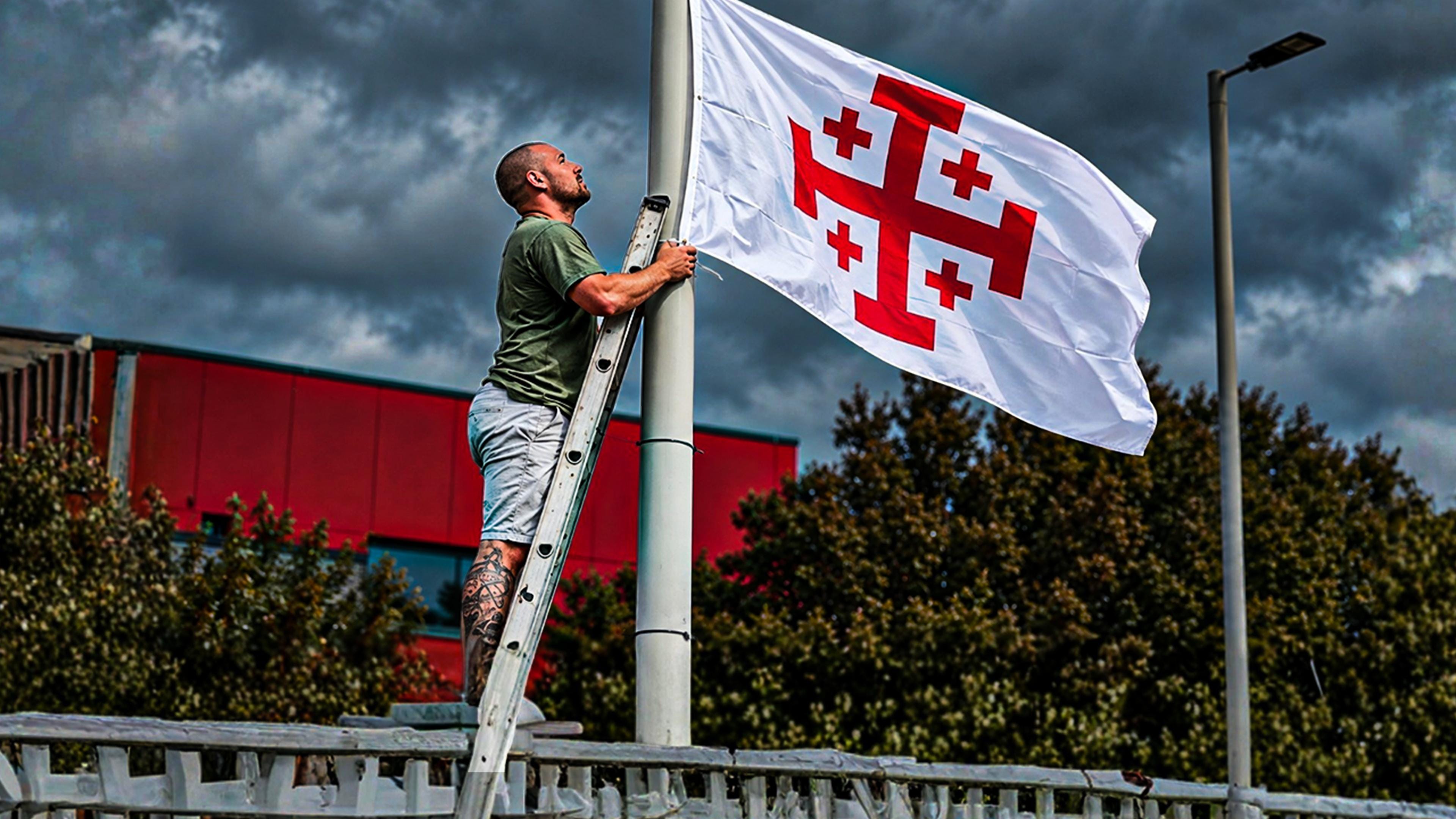
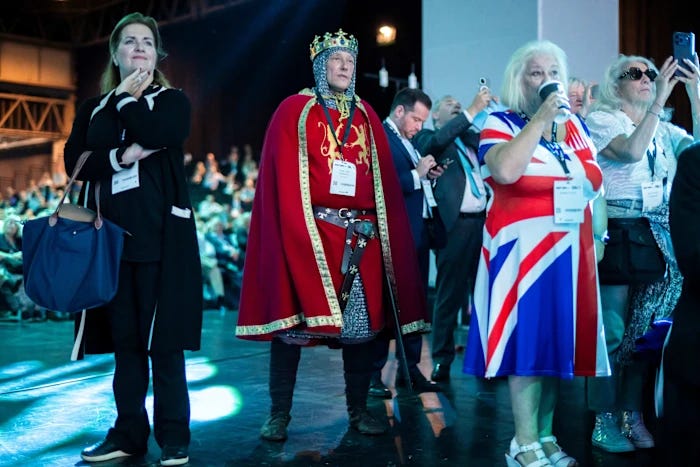
The Jerusalem Cross is going up on A-road lampposts. Richard the Lionheart kit at Reform rallies. Templars at Tommy Robinson marches. “Christ is King!” cried by Danny Tommo and his lot down in Dover. Crusader crosses are quietly usurping the Cross of St George — itself a crusader cross — at Portsmouth, London and points between. The algorithm is pumping out AI knight reels faster than a medieval pope pumping out papal bulls. England is Crusadesmaxxing.
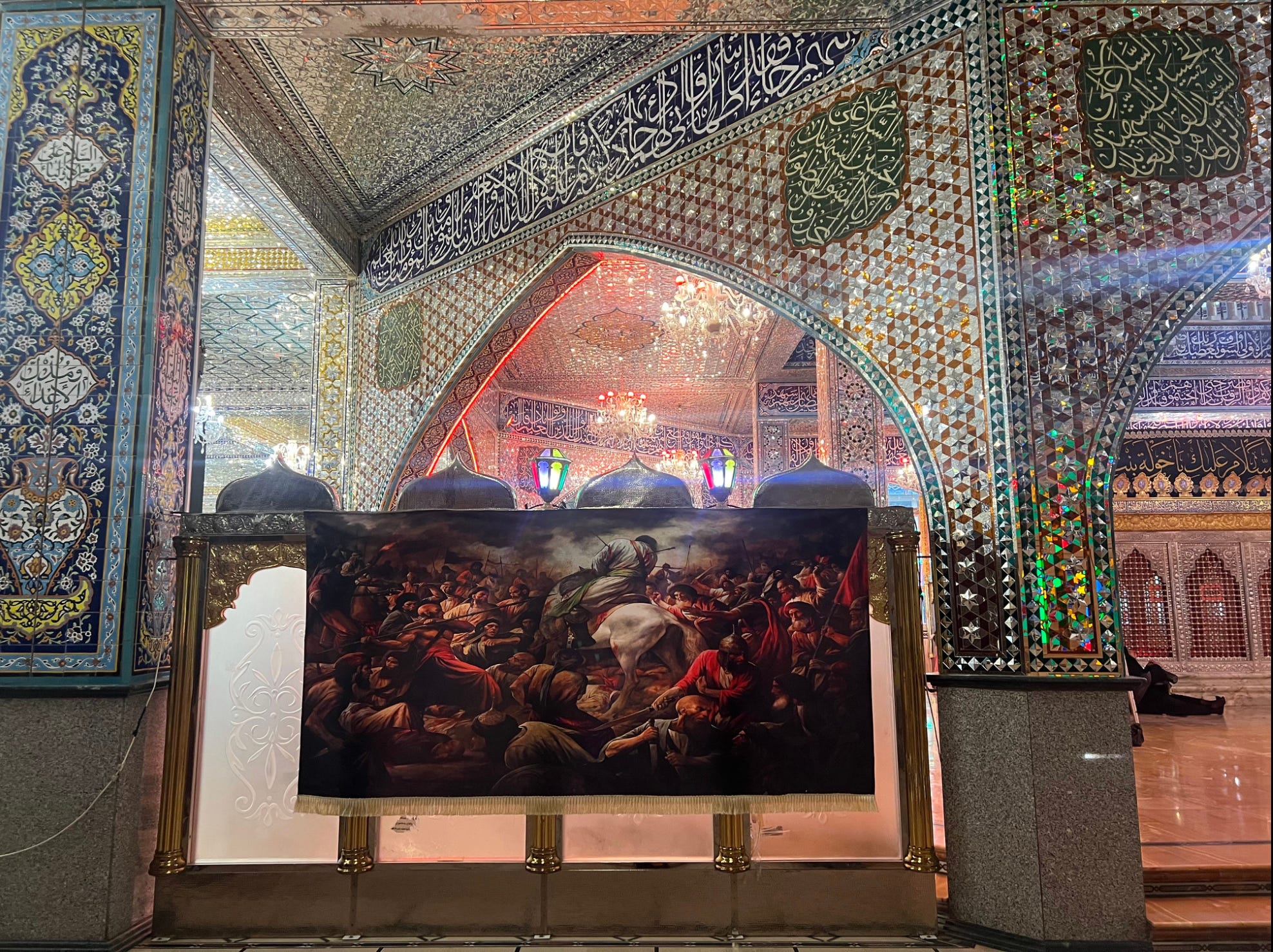
Until now this was, for me, a holiday pleasure. Beirut, Sidon, Tyre — the strongholds of ancient Outremer. A bit of beach in the morning. Smash out a castle in the afternoon. Dream sitch. There they have certainly not forgotten about “the Franks”. In a Hezbollah mosque in Baalbek I was greeted at the door by a canvas of a medieval European knight being slain by scimitar-wielding Saracens. Message received. Over in Malta, last redoubt of the old firm, I climbed Fort St Elmo, where the Ottomans got Hospitaller-mogged. Mel Gibson is now making the film.
Crusades-pilling starts at home. Chancery Lane is today home to attorneys, lawyers and bitter memories of divorce. But it was built in 1160 by the Knights Templar to join the Old Temple in Holborn to the New Temple, which still stands. The Hospitallers’ priory is up the road in Clerkenwell, still home to the Knights of St John, two minutes from Fabric nightclub.
But you needn’t pilgrimage to London. Crusadesmaxxing is nationwide. Our national flag came to us, bit by bit, by way of the Templars. Our patron saint St George entered the hearts of Englishmen at the Siege of Antioch in 1098. There the warrior saint arrived with a blazing white banner, succouring the knights to victory. At the Battle of Arsuf less than a century later our allegiance to the warrior saint was sealed. There he joined King Richard’s cavalry charge in the humiliation of Saladin, Butcher of the East.
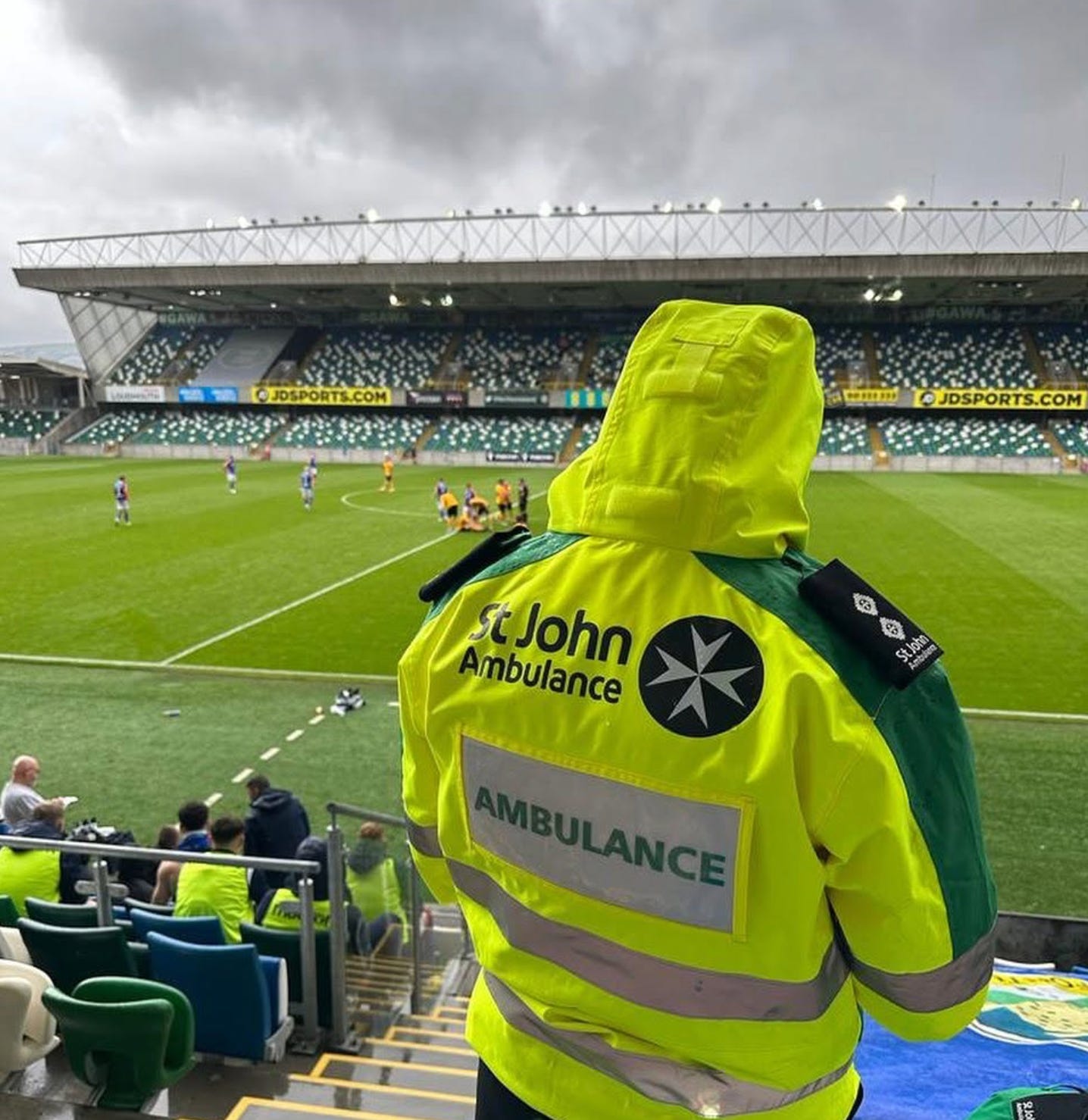
Next time you see a St John Ambulance outside the football turnstiles, remember what it is. Direct progeny of the Knights Hospitaller — the Order of the Hospital of Saint John of Jerusalem — raised to keep pilgrims and indigenous Christians from being carved up by Muslim brigands in the Holy Land. A thousand years on they patch up Christians and heathens alike. The history may have been memory-holed, but the logo hasn’t. The eight-pointed warrior-monk cross is still sewn to their high-vis jackets.
Explaining the Crusader comeback doesn’t take too much imagination. Hundreds of thousands of illegal migrants, predominantly from Muslim-majority countries, is no doubt a part of it. When Pakistani rape-gang survivors like Ella Hill recount being told that white “kafir” girls are slags who “don’t obey Allah” and therefore had it coming, my blood boils. The stories match the abuse of Christians in the Holy Land a millennium ago. Today’s lanyard elites have ignored it. But the chain-mail elites did not.
Some write of Western Man’s reawakening thymos: the honour-seeking part of the soul that Enlightenment materialism, post-war philosophy and misandrist feminism have done their best to snuff out. Add to that the sense that the country is being vandalised by progressive elites who hate it. No wonder patriots, who rightly love their country, are looking elsewhere for examples of heroic leadership. Where better than the chivalry and courage of those medieval knights.
There is a sharper question to ask. Not why the Crusades are back. But why the Crusades were ever taken from us. How did they become a byword for the base savagery of human nature, or for the nadir of Christianity? Lisbon was freed from the Moors by the Dartmouth fleet of the Second Crusade. The 1816 Bombardment of Algiers was a mission explicitly launched to free Christian slaves in the Maghreb — I will call that the last Crusade and fight you in the comments. Valiant Englishmen. Remembered as thugs. Or not remembered. That did not happen by accident. It happened in four stages.
Its first flogging came in the Reformation. Luther lashed the Crusades to the papacy he hated. The friar changed his tune somewhat when the Turks laid siege to Vienna in 1529. How convenient. Then came the Enlightenment. Edward Gibbon wrote in his Decline and Fall…: “The principle of the crusades was a savage fanaticism; and the most important effects were analogous to the cause.” Voltaire added that it was plunder and papal ambition, not defence or piety, that inspired the Christian soldiers. He was right about one thing — the road East was “ a road flooded with the blood of the Jews.”
Various pogroms of Jews, most famously the Rhineland massacres of 1096, are damnable. But it must be noted these were not papal Crusades. They were rogue mobs, condemned by popes and princes. Conflating these with the missions of Godfrey of Bouillon or Richard the Lionheart is as much a mistake as conflating the sack of Constantinople in the Fourth Crusade with the pious deeds of St Louis.
Then Steven Runciman, twentieth-century Byzantinist and best-selling Crusades historian, threw the third gauntlet-fisted hook. “The Holy War itself was nothing more than a long act of intolerance in the name of God.” That word “intolerance” — lifted from Karl Popper’s 1944 open-society thesis. “There was never a greater crime against humanity than the Fourth Crusade.” That phrase “crime against humanity”. Now using the language of Nuremberg. Whether he meant it or not, Runciman was equating the Crusaders with the Nazis.
A final blow came in 2007. A report from the Department for Education noted that schools avoided the Crusades, even the Holocaust, because teachers feared offending some Muslim pupils or contradicting history taught in local mosques.
Evidently these arguments are no longer holding. The Crusades represent something for the English again. And quite right too. On my show, our latest Crusades episode — an interview with Raymond Ibrahim — reached one million views on YouTube in under four days. It may well become our most popular interview ever.
Something is stirring.
Deus vult.
WM
More power to crusaders and their quest!! Christ is king!!
Your interview with Raymond was fantastic.